
A guest’s meeting starts at visitor check-in, not when the host opens the meeting room door. If reception expects the guest, check-in takes seconds and the host knows the moment they arrive, the meeting starts on time and on the right foot. If reception has to ask who they are and the host finds out late, it starts ten minutes behind, before anyone has said a word.
Ten Minutes Before Ten
It is 09:50. A guest arrives for a 10:00 contract review, early, the way careful guests are. The receptionist is on the phone with a courier. When she is free, she asks who the guest is here to see. The name is right, but there is no record of the visit: the host put the guest in the meeting invite and meant to register them separately later.
So reception calls the host’s desk. No answer, because the host is finishing another meeting two floors up. The guest stands by the desk, holding a coat. At 10:04 the host comes down, apologizing. The review starts at 10:12, with the first five minutes spent on how sorry everyone is.
Nothing broke. Every person did their job. And the meeting the host spent a week preparing for started with waiting.
Why The First Minutes Weigh So Much
The guest has nothing else to judge you by yet. They have not seen the proposal or met the team. What they have seen is how your building handles the one thing it knew was coming: them. A smooth arrival says this organization has its act together. Ten minutes by the desk says something else, however good the meeting is after it.
The host pays too. Instead of opening the meeting, they spend the first minutes repairing it. And the receptionist, who did nothing wrong, absorbs the gap with charm, because the desk is where three things that should have been connected meet for the first time: the host’s calendar, the visitor list and the person standing in front of her.
How many of this week’s guests stood at your desk before anyone knew who they were?
What Happens When The Host Doesn’t Know The Guest Has Arrived?
A chain, and every link costs a few minutes. Reception picks up the phone instead of the next guest. The host is interrupted, or simply late. The meeting room is ready and empty while the people who should be in it are in the lobby. And for a while there is a person in the building whose visit nobody recorded, which is a security question as much as a hospitality one.
The root cause is rarely the people. It is that registering a visitor lives in a different place from the meeting the visitor is coming to. The invite already says who is coming, when, and with whom. The visitor list is a second place someone has to remember, and on a busy week, the second place is the one that gets skipped.
How Should Visitors Check In At An Office?
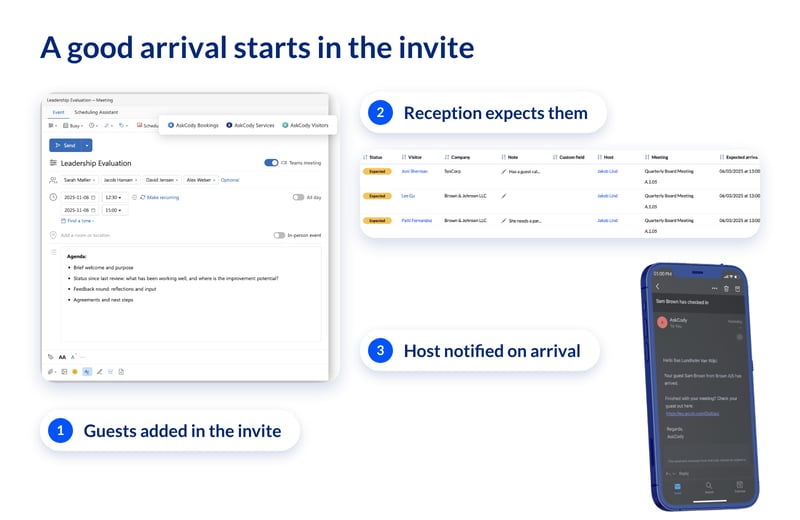
Good visitor check-in is mostly decided before the guest arrives. Three principles do most of the work.
The invite is the registration. When the organizer adds the guests to the meeting itself, reception knows who is coming, which host, which room and what time, without anyone registering them twice. Nothing to forget, because there is no second step.
Check-in takes seconds, and does not wait for a free receptionist. A guest who is expected should be checked in with one click at the desk. When the desk is busy, or there is no desk at all, a check-in kiosk by the door lets guests check themselves in, so the queue never becomes the welcome.
The host hears it from the system, not from a phone call. The moment the guest checks in, the host is notified, wherever they are. Reception stays with the guest, not on the phone, and the host comes down on time.
Do those three, and the visitor log stops being a chore as well: every check-in is recorded as part of the visit, with the meeting it belonged to. Our guide to common front desk problems goes through the rest of the desk’s daily friction.
Reception Is Where The Meeting Is Hosted First
When the routine runs by itself, the receptionist’s attention goes where it belongs: to the guest who is nervous about the interview, the client who needs a taxi at four, the group of six who arrived without a host. That is hospitality, and it is the part no system does for you. The system’s job is to clear the desk of everything else.
The same thinking holds for the office with no receptionist at all. A satellite office of a dozen people still has guests, and a kiosk by the door with the host notified on arrival is the whole reception function there.
Where AskCody Fits
AskCody Visitor Management is built into Microsoft 365, so the meeting is where the visit starts. The organizer adds guests to the Outlook invite with the AskCody Visitors add-in, and reception sees them in the Visitor Management Portal as expected, with the host, the meeting, the room and the arrival time. At the desk, one click checks the guest in and prints the badge; on a check-in kiosk, guests check themselves in. Either way, the host is told the moment the guest arrives.
And because the visit belongs to the meeting, the rest of the meeting can follow it: the room, and the catering and services booked with it.
The meeting starts at the door. Make sure someone knows it has.
Key Takeaways
- A guest’s meeting starts at visitor check-in, and the first minutes at reception are their first evidence of how your organization runs.
- Most front-desk delays are not people problems. Registration lives apart from the meeting, so the second step gets skipped.
- Make the invite the registration: guests added to the meeting are expected at reception without being registered twice.
- Check-in should take seconds, at the desk or on a kiosk, and the host should hear about the arrival from the system, not from a phone call.
- When the routine runs itself, reception can spend its attention on hospitality, and the visitor log completes itself.