.svg)
Why Meeting Journey Mapping is the Key to Understanding How Meetings (Work) Actually Works
Every organization hosts meetings. But very few truly understand how meetings happen. The workflows, dependencies, tools, and friction points that shape each meeting from the moment it’s planned to the moment it ends.
Meeting Journey Mapping changes that. It provides a structured way to visualize the as-is experience (how meetings are currently scheduled, prepared, and executed) and design the to-be (how they should ideally happen). It’s the blueprint for connecting business logic, technology, policies, and people, and aligning them toward one goal: creating a seamless workplace experience that empowers employees, not frustrates them.
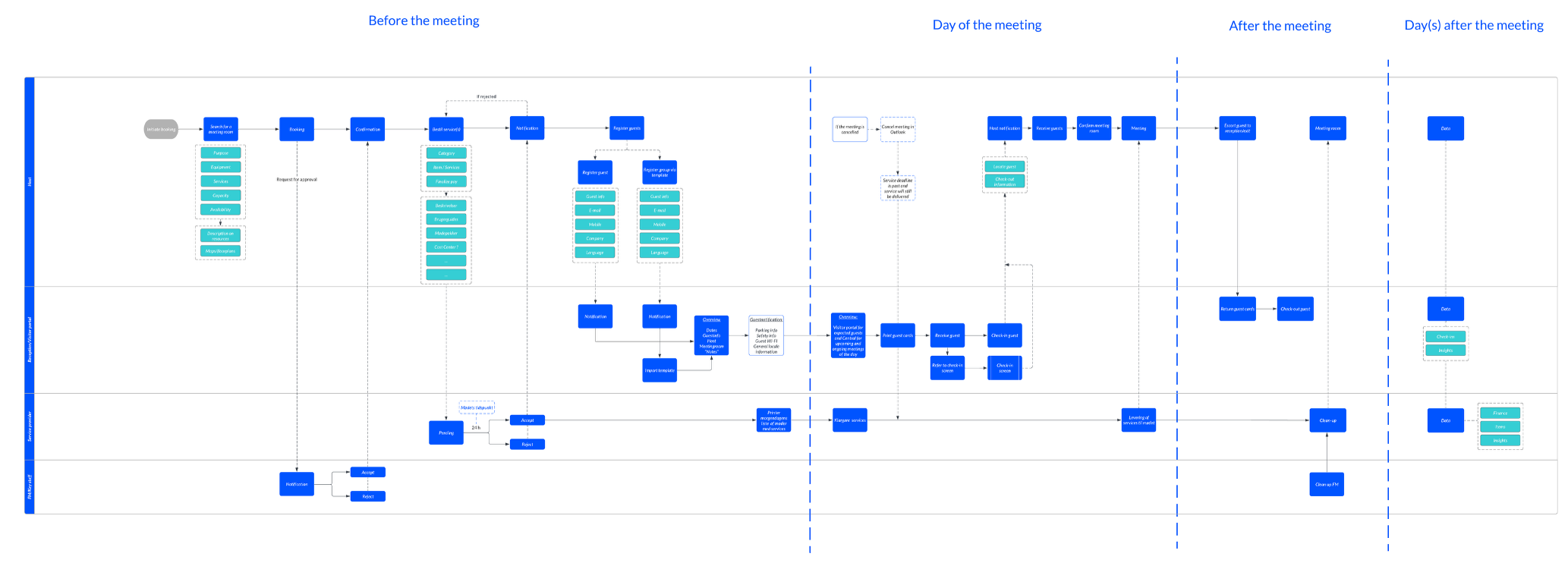
This blog is about how Meeting Journey Mapping with AskCody works, and how we do it.
Why Meeting Journey Mapping Matters
-
It reveals the invisible work.
Behind every meeting lies a complex web of actions, decisions, and rules. From booking rooms and catering to visitor management and IT setup, mapping exposes what’s really happening behind the scenes. And brings everyone (all stakeholders involved in meetings) to the same page (or map)
-
It connects silos.
Facilities, IT, HR, and business units each have a piece of the puzzle. Journey mapping brings them together to uncover interdependencies and break down barriers between systems and teams in one unified process.
-
It drives better technology adoption.
Implementing a new meeting management solution without understanding the current journey leads to resistance. Mapping ensures the technology fits your people and processes, not the other way around.
-
It provides a data-driven foundation for change.
Mapping helps quantify inefficiencies, measure friction, and identify where automation and simplification will have the biggest impact.
Who to Involve and Why
Meeting Journey Mapping is not just a Facilities Management or IT exercise. It’s a collaborative exploration of how meetings touch the entire organization. And it's the starting point for all AskCody implementations.
Core participants should include:
-
Facilities & Real Estate – Understands how physical space supports meeting types and usage patterns.
-
IT & Digital Workplace Teams – Knows the systems, integrations, and constraints that enable or block efficiency.
-
HR & Culture Teams – Ensures alignment with how people work, meet, and collaborate.
-
Executive Assistants & Office Managers – Frontline experts who experience friction firsthand.
-
End Users – Employees, managers, and teams who plan, attend, and run meetings daily.
-
Catering, AV, and Support Staff – Operate the logistics that make meetings successful.
-
Security & Compliance – Define the rules around access, data handling, and visitors.
Involving this cross-functional mix ensures every perspective is represented, from policy to practice, from system to user experience.
Getting Started: Why Meeting Journey Mapping Starts With Curiosity
Organizations often rush into implementing new workplace or meeting management solutions with a long list of assumptions. These assumptions tend to come from decision rooms, not real rooms. They come from policies written years ago, not from the lived experience of people who plan, run, support, and attend meetings every day.
Meeting Journey Mapping requires something different. It requires curiosity. It requires stepping into the organisation with open eyes and an open mind, searching for how meetings actually happen, not how we believe they happen.
There is a famous moment in the series Ted Lasso, where Ted plays darts with Rupert. Ted reflects on all the people who underestimated him throughout his life because they made assumptions instead of asking questions. He ends that reflection by saying that if they had been curious, not judgemental, they would have known who he really was. Meeting Journey Mapping relies on the same idea. If we slow down, observe, and ask the right questions, the truth of the meeting journey becomes visible. When we do that, we start solving real problems instead of imagined ones.
Curiosity is the discipline that transforms mapping from a checklist into a discovery process.
What to Explore? 25 Questions to Start Mapping the Meeting Journey
Curiosity is the key to understand and unlock how meetings work in your organization. Or at least should work.
We use (some of) these questions to guide discovery sessions and workshops when defining your as-is and to-be meeting journeys. And please feel free to get inspired and try it yourself.
-
What types of meetings take place most often across the organization?
-
How are meeting rooms and spaces currently booked or reserved?
-
What systems or tools are used to schedule meetings, and how are they connected?
-
Who can book rooms and are there any approval processes?
-
How do people find available rooms or spaces that meet their needs?
-
What data is used to determine room utilization or meeting success?
-
How are recurring meetings managed, updated, or canceled?
-
What are the typical friction points when scheduling a meeting?
-
How is catering requested, approved, and delivered? Any deadlines? Or rules arround when to order? And how is that managed?
-
How are AV and IT services coordinated or requested for meetings?
-
What happens when meetings are rescheduled or canceled? And how is that communicated?
-
How are visitors managed before, during, and after meetings?
-
What policies exist around booking etiquette or space usage?
-
How are no-shows or ghost meetings handled today?
-
What integrations exist between Outlook/Exchange and room booking or visitor systems?
-
Who owns the meeting experience end-to-end? And where does ownership break down?
-
What metrics are used to evaluate meeting efficiency and space utilization?
-
How do employees report issues with rooms, AV, or services?
-
What data or feedback do we currently capture from employees about meeting experiences?
-
How do hybrid or remote meetings differ in setup, support, or complexity?
-
What manual workarounds or shadow processes exist to “make meetings happen”?
-
What rules or constraints (IT, HR, security) shape how meetings are organized?
-
How does the meeting experience differ across locations or departments?
-
What would the ideal meeting journey look like if constraints didn’t exist?
-
What impact would a frictionless meeting journey have on productivity, culture, and experience?
Etc.
Etc.
From Mapping to Transformation
A well-facilitated Meeting Journey Mapping session does more than produce a visual map. It builds shared understanding. It sparks dialogue between teams that rarely talk. It breaks down silos. And it creates the foundation for meaningful digital transformation where business logic, user experience, and technology work in harmony.
When you understand how meetings actually happen, you can finally design how they should happen.