.svg)
AI Remembers What Was Said. Nobody Can Tell You What Happened.
Every meeting leaves two records behind: what was said, and what actually happened. The first is about to be written for you, automatically, in the room. The second, who moved the meeting, where it went, whether the catering and the guest list went with it, still lives in a chat thread and somebody's memory. That is the half that costs you money.
It is 16:40 on a Tuesday. Tomorrow morning's nine-person meeting has to move, because a bigger group needs the room. Someone opens the invite, changes the room, sends the update. Forty seconds of work, and it feels handled.
Wednesday morning: the catering is set up in the original room. Two attendees are standing outside it, checking their phones. A guest is waiting at reception for a meeting that, as far as reception can tell, is somewhere else now. A trolley gets pushed across the building. The meeting starts eleven minutes late, and nobody writes any of that down.
Three weeks later, finance asks why service spend is up and why one department keeps complaining about rooms. There is nothing to look at except the invite, which shows a tidy meeting, at the right time, in the right room. Sound familiar?
The Meeting Record Has Two Halves
We talk about the meeting record as if it were one thing. It is two, and they behave completely differently.
The content record is what was discussed, decided and assigned. The operational record is everything else: who booked the meeting, who changed it, which room it ended up in, which services were attached to it, which attendees actually came, and who walked through the front door for it.
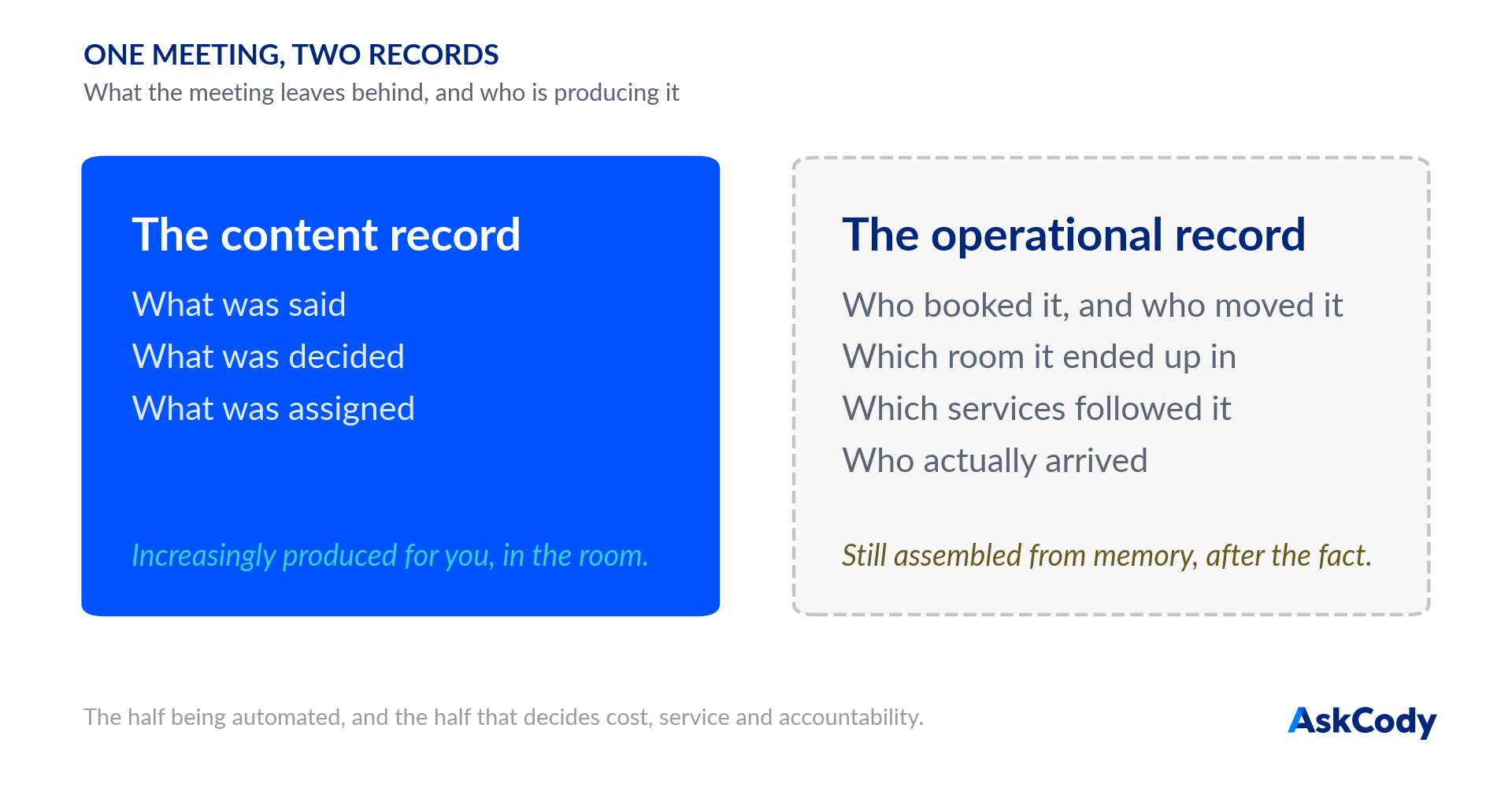
Most organisations have never had a real operational record. They have had a calendar invite, which holds a time, a room and a list of names, plus a scattering of traces in other systems that were never designed to agree with each other.
One Half Is About To Be Automated For You
Here is what makes this the moment to look at it. Microsoft's Facilitator agent now brings AI generated notes into Teams Rooms: turn transcription on, and notes appear on the front of room display during the meeting and stay available to participants afterwards. The June 2026 update went further, letting people ask the in-room agent questions out loud, and letting it flag a room problem and help find an alternative.
Read that slowly. The content half of your meeting record is on its way to being produced by default, by the platform, whether or not anyone in your organisation planned for it. The operational half is exactly where it was five years ago.
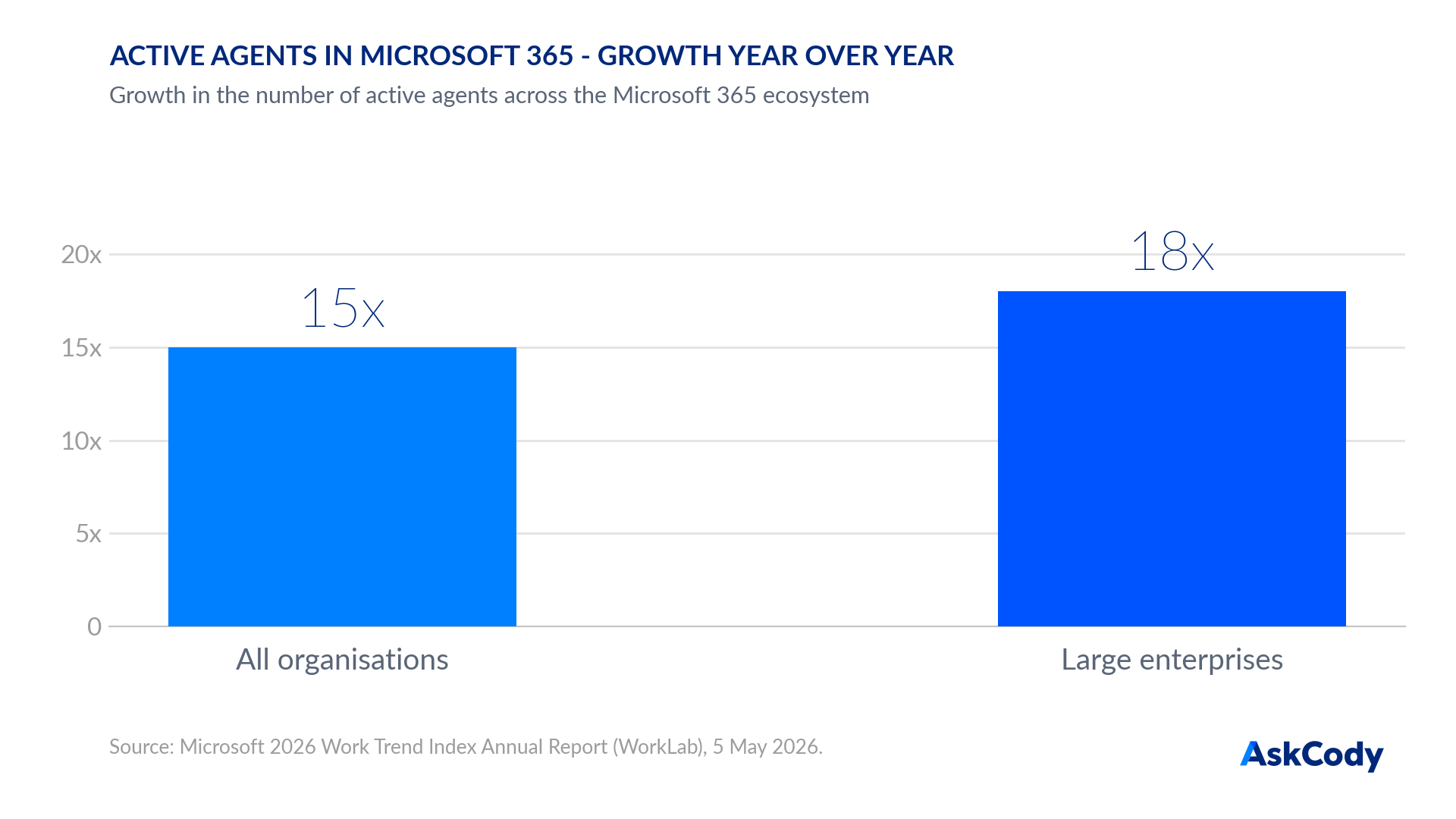
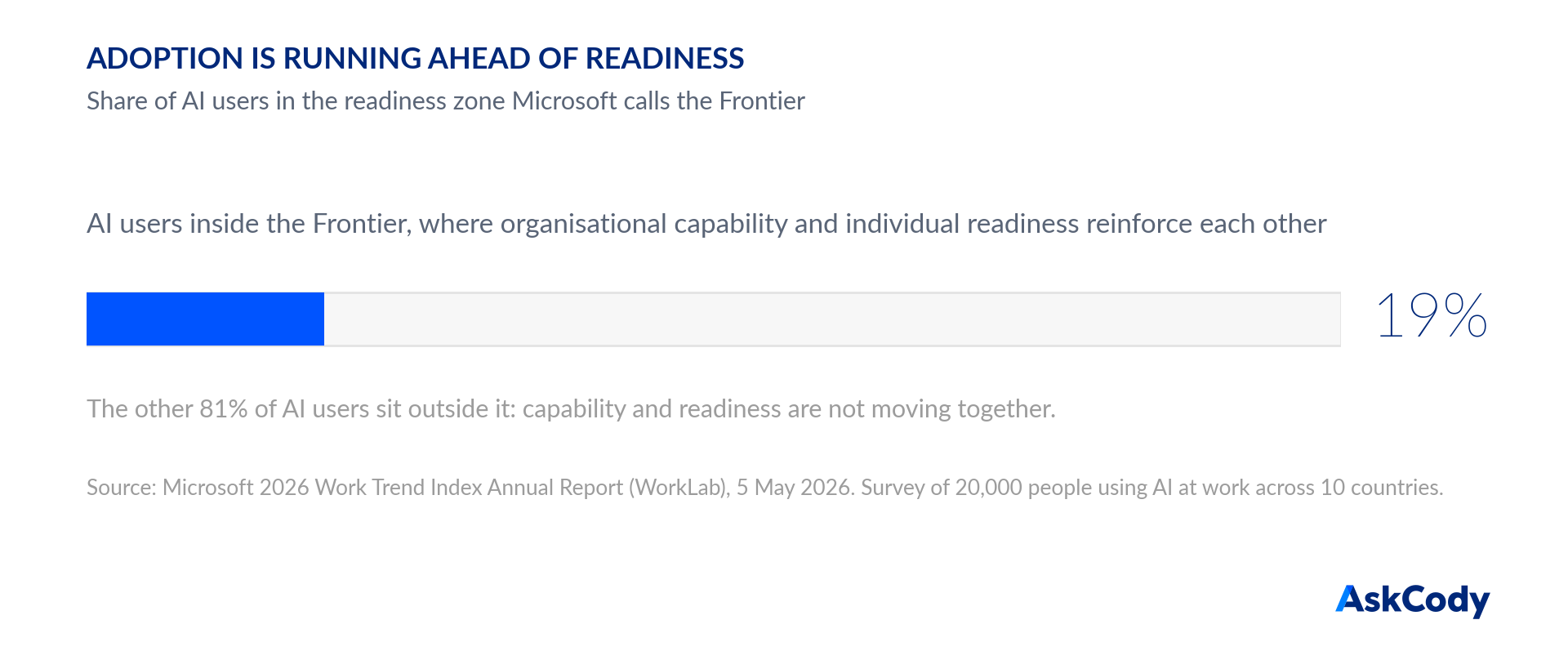
That asymmetry is not specific to meetings. Microsoft's own 2026 research counted 15 times more active agents in Microsoft 365 year over year, rising to 18 times in large enterprises, while only 19% of the AI users it surveyed sit in what it calls the Frontier, the zone where organisational capability and individual readiness reinforce each other.
Capability is arriving faster than the operating model around it. Applied to meetings, that means excellent notes about a process nobody governs. None of which is a criticism of the notes. Better notes are good. They just answer a different question than the one your service team, your reception and your finance director are actually asking.
Why The Operational Half Stays Broken
The instinct is to blame discipline, and discipline is not the problem. There are three structural reasons, and they are worth understanding before you try to fix anything.
The calendar was never built to hold operations. An invite holds a time, a place and some people. It does not hold 24 lunches at 11:45 from the in-house kitchen with the order confirmed, or two external guests one of whom has to sign an NDA, or the U-shape layout the room needs to be in by nine.
The change is the hard part, not the booking. Anyone can book a room. What breaks is the change: one edit has to reach the kitchen, the guest list, reception, the display outside the door and whoever sets out the chairs. When that propagation depends on human effort, it happens unevenly, and that is the exact moment the record and reality separate.
Nobody owns the seam. Facilities own the room. IT own the platform. Reception own the door. The assistant owns the meeting. So the operational record belongs to everybody, which means it belongs to nobody, and no single team can close the gap alone.
What One Operational Record Looks Like
Not more process. One place where the meeting exists once, with everything attached to it.
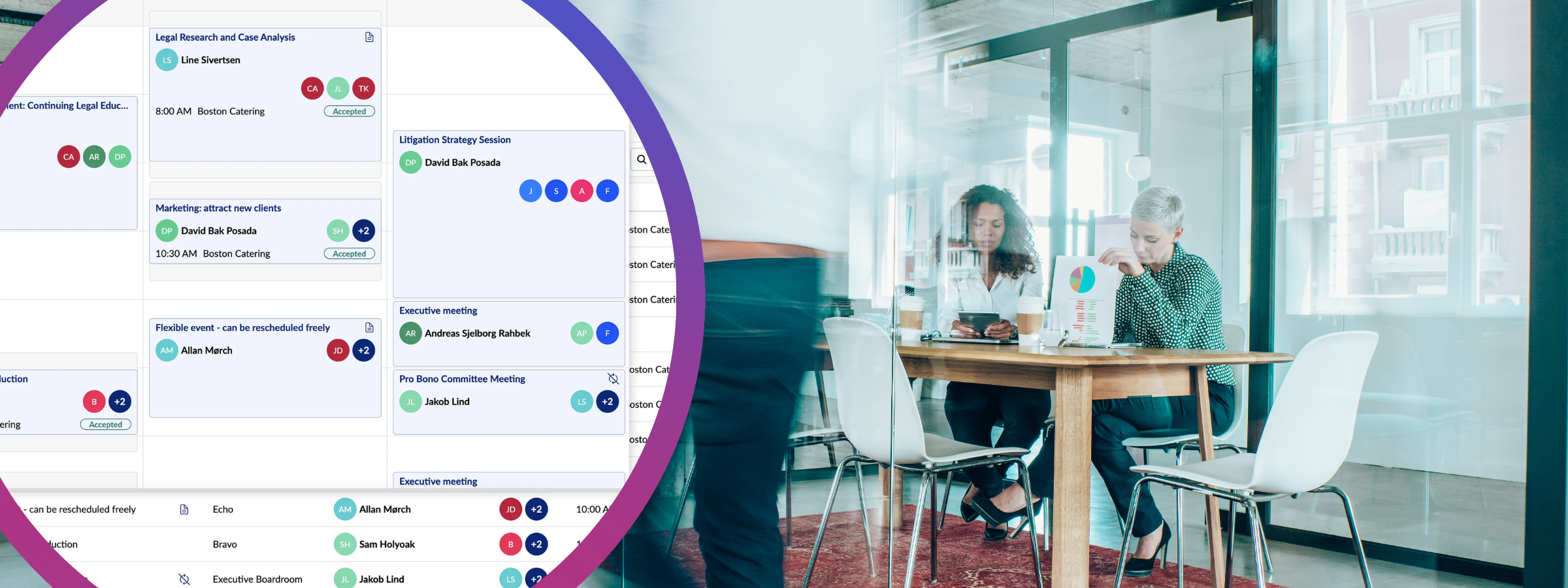
In practice that is a single view of every meeting across your rooms and locations, showing the services on it with delivery time, provider and real-time order status, the attendees and whether they actually turned up, and shared notes so context stops living in one person's inbox. That is what Workplace Central is for: the operational half, visible in one grid.
Then the part that matters. You change the meeting in that one place, and everything attached to it follows. Reschedule by dragging the meeting card, and the change writes back to the Outlook invite, attendees get an updated invitation, the catering order moves with the meeting, and expected guests update in visitor management. AskCody calls this follow the meeting logic, and it is described in more depth in Follow-the-Meeting Intelligence.
The point is not the drag and drop. The point is that after the change, there is still exactly one version of what is true.
What It Costs To Leave It Open
Money is the easiest to see. Services ordered, moved and duplicated by hand create waste that nobody can trace afterwards, because the trace was never written.
Then exposure. In client-facing and regulated work, who changed this meeting and who was in the room for it are questions you should be able to answer from a record rather than from memory.
Then credibility. Every workplace number you report upward starts life as an operational meeting record. If that record is assembled after the fact, your reporting inherits the gaps, and you end up defending numbers you privately do not trust.
And a quieter cost. The people who hold the gap together are your assistants, your reception team and your service staff. They absorb every uneven change personally, and they are the least visible people in the process.
Govern The Half That Is Actually Yours
The content half of your meeting record is being solved for you by the platform, and that is genuinely good news. The operational half was never a technology gap in the first place. It is a governance gap, it has been open for years, and it is the half that decides whether the meeting works.
So it is worth asking plainly: if someone asked you tomorrow what actually happened in a meeting three weeks ago, not what was said, but what was ordered, moved, delivered and by whom, could you answer from a record?
Key Takeaways
- A meeting leaves two records: the content record (what was said) and the operational record (who booked it, who changed it, which room, which services, who arrived).
- In-room AI notes mean the content half is increasingly produced by default. The operational half is not, and it never was.
- Adoption is outrunning the operating model: 15 times more active agents in Microsoft 365 year over year, 18 times in large enterprises, while only 19% of AI users are in Microsoft's Frontier readiness zone.
- The operational half breaks on the change, not the booking, and no single team owns the seam between room, platform, door and meeting.
- One view of the meeting with its services, attendees and notes, where a change propagates to the invite, the services and the guest list, turns the operational record from memory into a record.