.svg)
Purpose Driven Meeting Room Booking: The Future of Smarter Scheduling
Most organizations still book meeting rooms through a narrow lens. We ask for capacity. We look for a screen. We check the distance from our desk or the nearest coffee machine. These criteria are simple and familiar, yet they reduce workplace scheduling to a guessing game. You know this feeling well: you walk into a room that is technically correct but functionally wrong. The equipment is overkill, the layout mismatches the conversation you intend to have, or the room signals the wrong impression to guests.
If we take a moment to reflect, the question is obvious. Should capacity or proximity really be the first filters we use when choosing where important conversations happen? Or is this simply muscle memory from a time before hybrid work changed expectations and behaviors?
At AskCody, we believe purpose should guide every booking decision. Not as a buzzword, but as a practical step toward better outcomes and more intelligent workplaces.
Why Purpose Matters More Than Capacity
When you book a meeting, you are not booking a room. You are booking an experience, an outcome, and often a relationship. Different meetings have different needs. A client negotiation demands polish and privacy. A recruitment interview calls for calm and neutrality. A project stand-up thrives in an informal, accessible space. A board meeting cannot take place in the open collaboration zone, no matter how convenient it might be.
Rooms are not created equal, and they should not be treated as if they are.
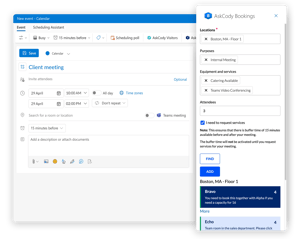
Purpose based booking acknowledges this reality. By asking the user a simple question at the start of the booking flow, we transform the entire experience:
What is the purpose of your meeting?
The system then presents only the spaces that fit. The user does not browse dozens of options. They see the right ones, quickly, confidently, and without second guessing.
This is not just about user experience. It is about behavior. When people choose rooms that match their actual needs, organizations reduce resource waste, avoid misaligned bookings, and gain more meaningful patterns in workplace data.

From Guesswork to Guidance
Traditional booking tools leave users to interpret room names, guess equipment configurations, or rely on tribal knowledge passed through colleagues. This inevitably leads to:
-
Large rooms booked by small groups
-
Premium rooms used for routine internal meetings
-
Technology mismatches that disrupt productivity
-
Poorly utilized spaces that sit idle while employees feel a shortage
A purpose driven model shifts responsibility from the user to the system. The organization defines what each room is built for, and the platform ensures those rooms are selected for the right reasons.
This is a structural improvement, not a cosmetic one. By reducing decision complexity, we reduce friction. By steering people toward appropriate spaces, we reduce waste. By aligning purpose and place, we improve meeting quality.
Reflect for a moment on your own behavior. How often have you booked a room simply because it was the closest, the only name you recognized, or the first one that appeared in the list? What would change if every booking began with clarity instead of convenience?
Better Decisions Lead to Better Workplace Utilization
Purpose driven scheduling strengthens workplace performance at multiple levels.
Better user experience
People book faster and with more confidence. They no longer fear choosing the wrong room for the wrong purpose or disrupting a meeting with equipment problems.
Better organizational control
You define your meeting types, the standards for each, and which rooms support them. This creates consistency in how space is used and how meetings are executed. This works really well for organizations and workplaces with a clear distinction between "internal" and "external rooms", internal "conference centers" for client meetings, or internal rooms that are for internal projects only (you don't wont external guests, no matter how important, walking into a meeting room with next years most important secret projects and innovations hanging on the walls).
Better space utilization
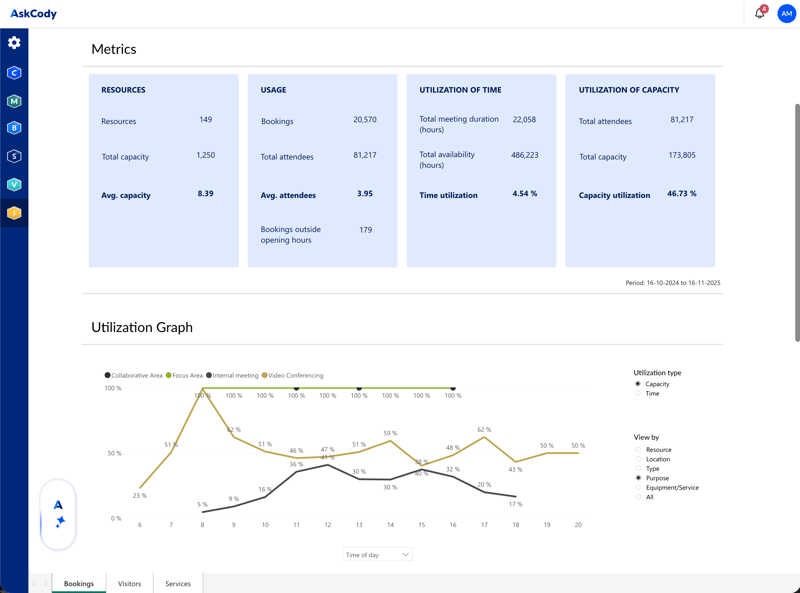
Data becomes cleaner and more meaningful. You can finally see how meeting types map to room usage, helping you optimize design, capacity planning, and future workplace strategies.
Better business outcomes
When teams meet in the right environments, collaboration improves, decisions come faster, and impressions on clients or VIPs become sharper and more intentional.
Purpose becomes a catalyst for a workplace that performs, not just a collection of rooms that happen to exist.
Moving Toward a More Intentional Workplace
The modern workplace demands more than simple room reservation filters. It requires alignment between why we meet and where we meet. This alignment is what purpose driven meeting room booking delivers.
Organizations that adopt this approach do not just improve scheduling. They improve culture. They encourage people to think intentionally about every interaction. They remove friction from daily workflows. They build a workplace where the environment supports the work instead of standing in the way.
You can continue to base your bookings on convenience and habit. Or you can introduce a system that prompts a more thoughtful choice, one that helps your people and your workplace perform at a higher level.
The question remains: what do you want your next meeting to achieve, and will the room you choose help you get there?